

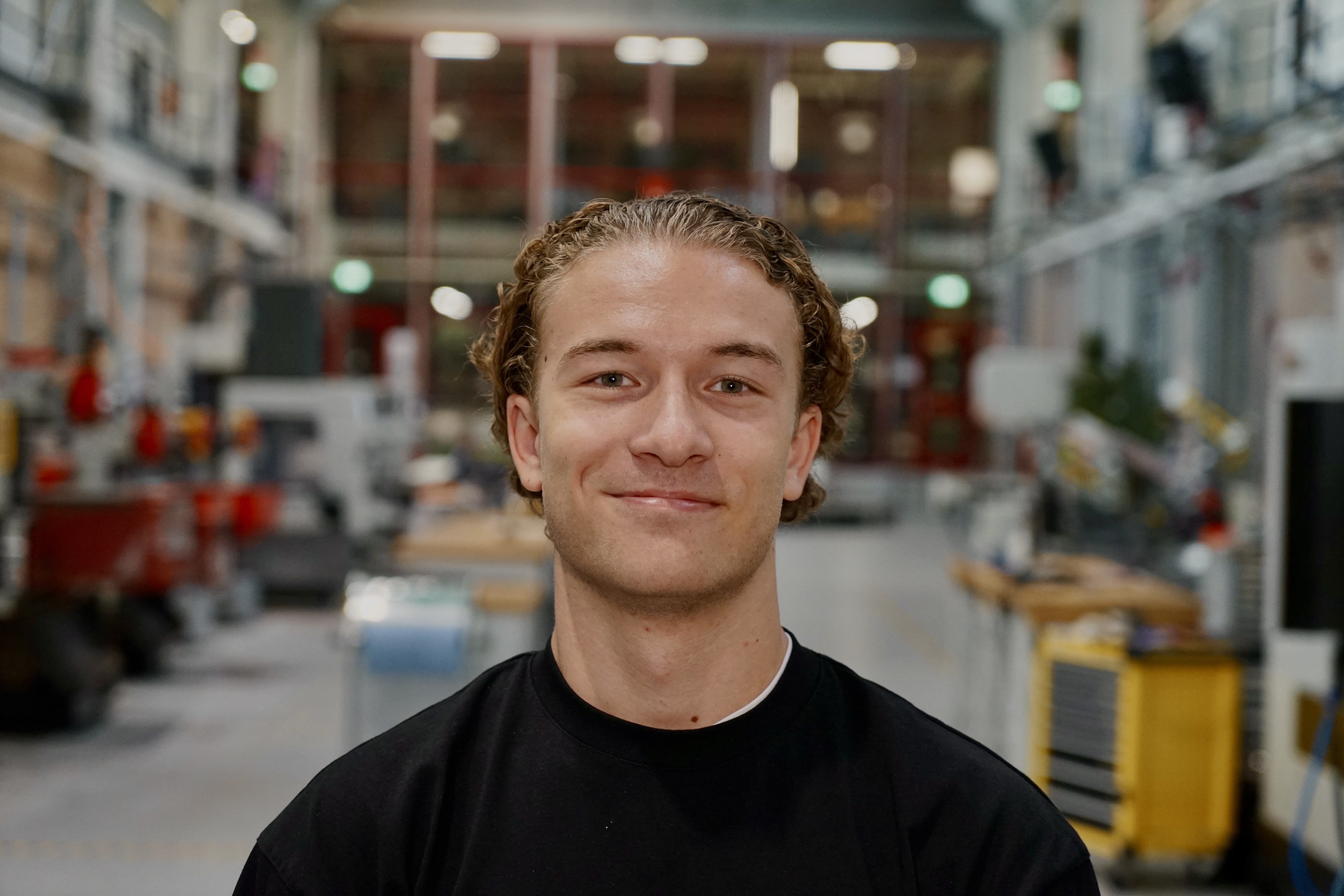


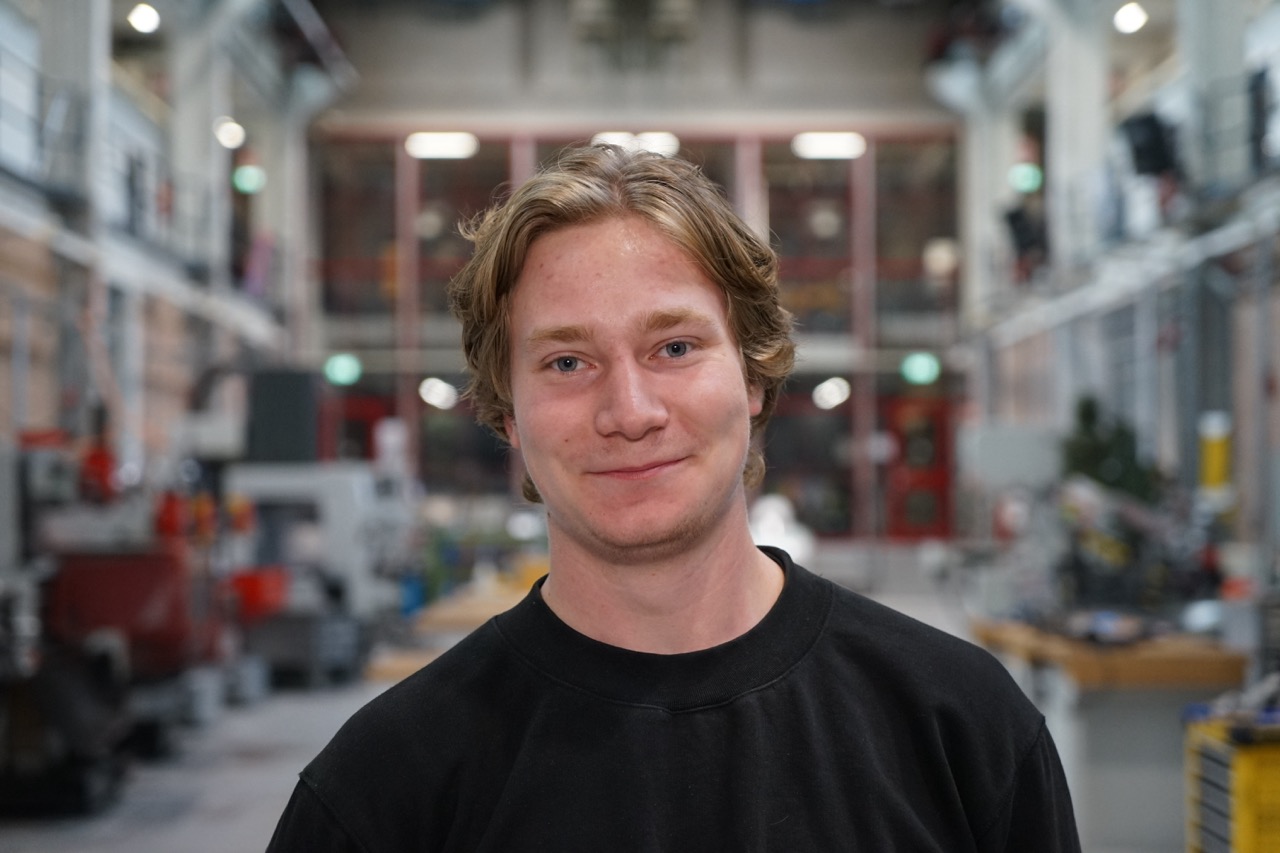
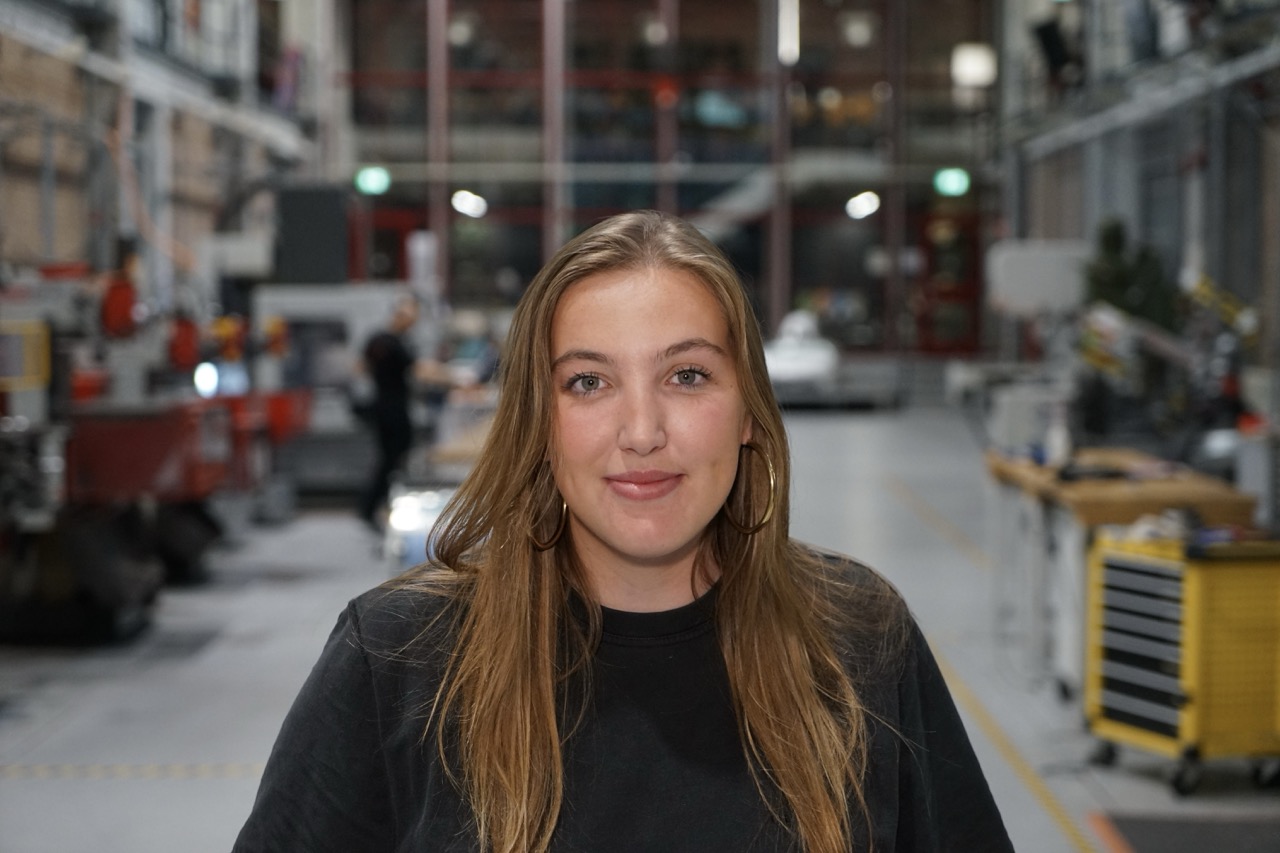
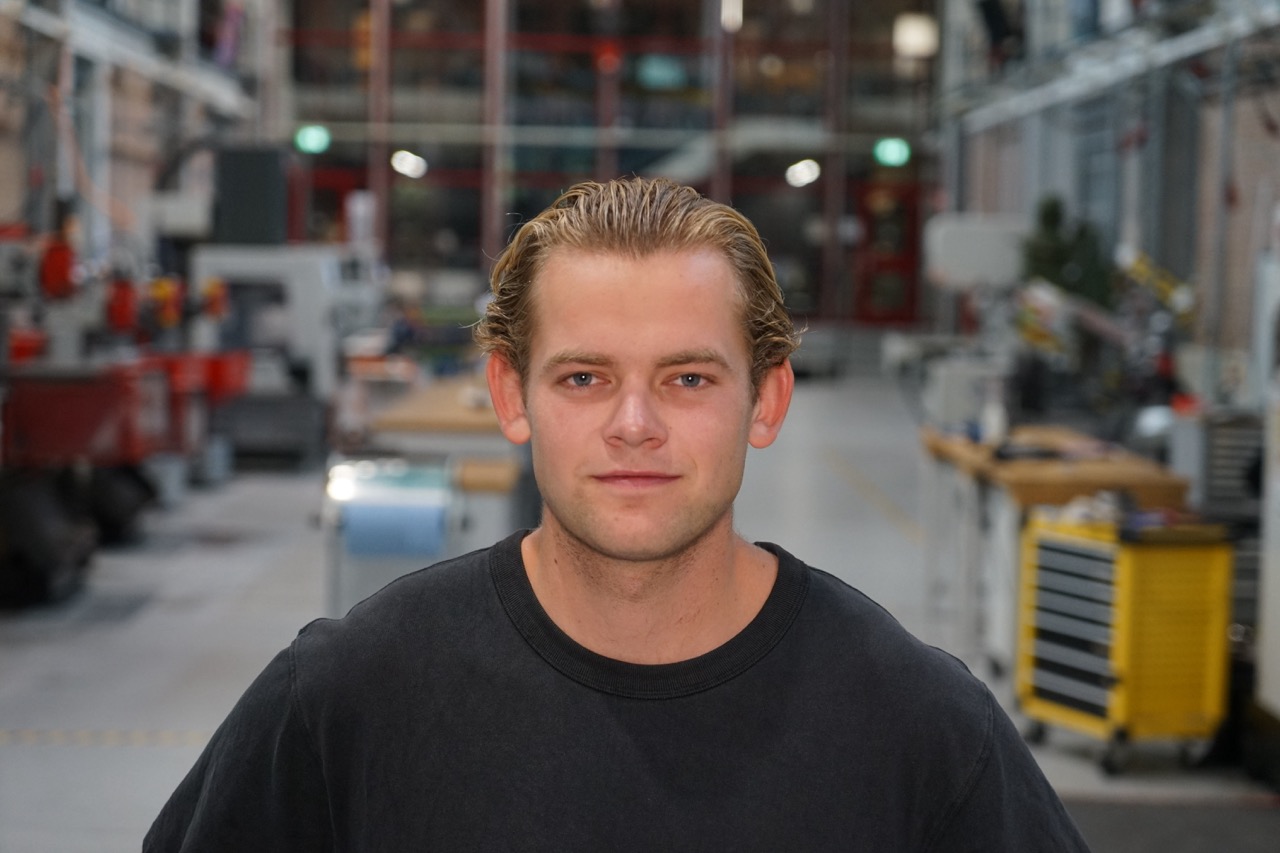
Delft Hyperloop is proud to introduce "The Hyperloop Experience" — a dynamic, mobile showcase of all of Delft Hyperloop's previous innovations and achievements. This experience not only explains the hyperloop concept but also features some of our prototypes on display. The content of our experience is customizable, allowing for a highly personalized encounter. We're also very flexible in how we present this to our audience.
Take a look at the photos below for a glimpse into our pop-ups at Rotterdam Central Station and Forum Groningen, showcasing what our experience has to offer. If you're interested in bringing the 'Delft Hyperloop Experience' to your company, please don't hesitate to contact Constantijn Adorf, our PR & Events Manager, to explore the possibilities.


Delft Hyperloop is a student team from Delft University of Technology in the Netherlands. We work towards the European Hyperloop Week competition, where Delft Hyperloop VI won the Complete Pod Design Award in 2022. Besides that, we work on bringing the hyperloop closer to reality by doing research and tackling the challenges that still hold its implementation back.
Delft Hyperloop was founded in September 2015.
You can find all our partners on our partners page.
The hyperloop is often called the fifth mode of transportation, because it doesn't fit into any of the current ones (car, boat, plane or train). The big difference is that a hyperloop pod travels through a near-vacuum tube, which brings air resistance down to a minimum. On top of that, the pod levitates magnetically, so there is no rolling resistance. Because both resistances are so low, the hyperloop can travel efficiently at speeds of around 1000 km/h, faster than a plane, with the energy use of high-speed rail.
A hyperloop can reach around 1000 km/h, because air and rolling resistance are reduced so much. Air resistance rises sharply as you get close to the speed of sound, which is why 1000 km/h is seen as the practical top speed. That speed can be reached after roughly 40 kilometres. The speed record in the student competitions is 463 km/h, set by TUM Hyperloop in 2019. Our DH04 pod reached 360 km/h on a 368-metre track.
People travel further and further, and current transport is running into its limits: it is reaching maximum capacity, it is harmful to the environment, and it is sensitive to disruptions. To meet the 2015 Paris Agreement, transport has to become greener. The hyperloop can help, especially by replacing short- and medium-haul flights. It is energy efficient, has a high capacity and can reach speeds of around 1000 km/h.
To speed up the development of the hyperloop, SpaceX organised the Hyperloop Pod Competition until 2019. Student teams from all over the world designed and built a half-scale hyperloop pod to travel through a 1.2 km low-pressure tube built by SpaceX in California.
After the first SpaceX editions, four student teams (Delft Hyperloop, HYPED, Swissloop and Hyperloop UPV) started a new competition with a stronger focus on scalability: the European Hyperloop Week (EHW). The EHW is a yearly international competition that brings the hyperloop community together and encourages innovation. Student teams from all over the world compete for different awards, each focusing on another aspect of a scalable hyperloop.
Hyperloop Connected is an initiative of Delft Hyperloop: a platform that gives an overview of hyperloop knowledge. There was no single place that showed who works on the hyperloop and what they work on. On Hyperloop Connected you can find all kinds of hyperloop information, and anyone can submit an article.
Hyperloop technology is being developed by several companies and student teams, but legislation and certification aren't ready yet. That takes time with any innovation, especially in Europe, where many countries are involved. Countries like China, India or the United Arab Emirates may be able to move faster, so the first commercial track could be built there within 10 to 15 years, with Europe and the USA following later. Technically, a hyperloop system could be designed and tested within 10 years, but politics and economics may slow things down, so an exact date can't be given.
Scaling up comes with technical challenges, such as building the infrastructure, communication, thermal management and energy supply. Building the infrastructure itself is also a challenge. It needs a large initial investment, most likely a mix of private and public money. At 1000 km/h the hyperloop can't make sharp turns, and the tubes will be visible in the landscape, so routes need careful planning and close contact with the people living nearby. Finally, getting permission to transport cargo, and especially people, takes time. That needs a regulatory framework with hyperloop standards, which the European Union is working on, and agreement between hyperloop companies on the basic technology.
A hyperloop uses about as much energy as high-speed rail, while being much faster. Compared to a plane, its footprint is much smaller, and unlike planes it can run on renewable electricity.
The tubes the pods travel through are a near vacuum. Lowering the air pressure cuts aerodynamic drag a lot. The tubes will operate at around 100 pascal. A series of vacuum pumps first removes the air and then keeps the pressure low during operation, because some air always leaks in through welds, seals and outgassing. Going much lower than that isn't worth it: commercial pumps work best above 10 pascal, so the extra energy for the pumps would cancel out the gain in drag.
Underground infrastructure is very expensive, but it can be a good option where a route has to pass through a city centre, so housing can be avoided. In rural areas, tubes above ground are the more likely choice.
The original concept used air bearings, but those are inefficient, complex and risky, so magnetic levitation is preferred. Electrodynamic suspension (EDS) is passive and works above a lift-off speed of about 12 km/h, using eddy currents induced in the track. Electromagnetic suspension (EMS) is active: the gap between pod and track is measured and controlled all the time with electromagnets, as in the Transrapid maglev train. For propulsion, a linear synchronous motor (LSM) or a linear induction motor (LIM) can be used. Because a LIM has larger losses, the LSM is the more efficient choice.
An airlock can move the pod from the tube into the station. The pod enters a chamber between two doors, the doors seal, and air is pumped in or out depending on the direction of travel, much like on a space station. Another option is a sealed jetway around the pod, so a station doesn't need many airlocks.
Because the tube is a near vacuum and the inside of the pod is at normal pressure, the pod works like a pressure vessel, just like an aircraft. The best shape for that is a cylinder. Since the tube can't be a perfect vacuum, the pod is still shaped to reduce drag, which gives it a capsule shape, with a gap between pod and tube for the air to flow past. A pod would carry about 50 passengers.
Operating costs are very low compared to other transport, but the infrastructure is expensive and estimates vary widely: from about $16 million to $160 million per mile, with an average of around $73 million per mile. A single pod would cost about €8 million.
The hyperloop has to earn back its investment, but a ticket shouldn't cost more than a plane ticket to the same destination. Estimates for Amsterdam to Paris range from €50 to €100, for a journey that is greener, faster and more comfortable. With variable pricing, off-peak tickets could be even cheaper.
Yes. Because the pod levitates and propulsion is built into the infrastructure, very few systems inside the pod can fail. In an emergency the pod can keep moving to a safe zone where passengers can get out. Following EU rules for railway tunnels, there will be emergency exits every 500 metres, with stairs down to the ground where the tube runs on pillars.
Travelling by hyperloop should be as easy as taking the train, at speeds faster than a plane. After buying a flexible ticket and a quick security check, you can board any pod. Seats are designed for comfort, comparable to business class, with three seats per row and an aisle. A pod fits about 50 passengers, with room for passengers with disabilities and a toilet. There are no windows, but the ceiling mimics daylight to help passengers feel at ease. Where possible, stations will be underground and close to city centres.
Safety has to be proven before a hyperloop opens. Long test tracks are being planned so the system can be tested at full speed and reach Technology Readiness Level 9. Once it is proven safe at high speed, it can first carry freight, where the consequences of a failure are smaller, and after that passengers.


