THIS IS THEIA

Take a closer look

DH09 IS SCALING UP

THEIA is the pod of Delft Hyperloop IX. With it, the team took a major step towards scaling up hyperloop technology and driving standardisation, both essential for an international hyperloop network. THEIA featured custom-built motor drives, a brand-new motor and full compatibility with vacuum environments. Its diameter was three times larger than the year before, and with THEIA, Delft Hyperloop became the first student team to test at the European Hyperloop Center in Veendam.

THEIA

THEIA was the first Delft Hyperloop pod to demonstrate on the 420-metre-long test track of the European Hyperloop Center. With its new pod design, Delft Hyperloop took a crucial step towards standardisation, a key factor in the implementation of an international hyperloop network. THEIA features a cutting-edge levitation system, advanced sensor integration and an optimised structural frame.

Take a look at all the different subsystems in the pod and their technical details to understand how this innovation was realised.

Theia is equipped with an advanced magnetic levitation system for stable, contactless travel and a custom powertrain that ensures high performance and energy efficiency. A precise braking system provides controlled deceleration for safe operations. The structural frame is optimized for minimal weight and high strength, supporting scalability. Real-time monitoring is enabled by a sensor suite tracking key parameters.

Additionally, Theia integrates a modular electronics architecture for seamless communication. Its thermal management system prevents overheating under high-speed conditions. To achieve high velocities, Theia features a new double-sided P8S24 linear synchronous reluctance motor.

MECHANICAL

The Mechanical department is responsible for designing, building, and ensuring the structural integrity of the Hyperloop pod. This includes the chassis and vital components that must withstand extreme conditions while ensuring easy access for rapid prototyping. The team focuses on creating a design that is lightweight yet strong, essential for high-speed travel and scalability.

The chassis is built from a hybrid aluminum space frame, combining low weight with high strength, similar to how aircraft use lightweight materials for both strength and fuel efficiency.

The vacuum box (VB) protects vital components from the harsh vacuum environment while maintaining accessibility for quick adjustments. A vertical mounting plate simplifies access, eliminating complex drawer systems. This setup ensures efficient modifications during testing, similar to how engineers in the automotive industry make real-time changes to vehicle prototypes for optimal performance.

The chassis and VB are designed to withstand extreme conditions while enabling rapid iteration.

LEVITATION

The Levitation department is focused on developing efficient and reliable systems that allow the Hyperloop pod to float above the track. Their main objective is to achieve precise control over both vertical and lateral levitation, minimizing friction for smooth and stable travel.

The vertical levitation system uses HEMS (Hybrid Electromagnetic Suspension), combining permanent magnets and electromagnets for efficient levitation. The airgap, the distance between the pod and track, is precisely controlled using coils and laser offset sensors, ensuring stability. The air gap between the pod and the track is maintained at 13mm.

For lateral stability, the EMS (Electromagnetic Suspension) system is employed to keep the pod centered, using only electromagnets and requiring less energy compared to traditional systems.

Together, these systems levitate the 1.4-ton pod using less energy than a vacuum cleaner.

PROPULSION

The Propulsion department is responsible for designing the motor and systems that propel the pod forward at high speeds without physical contact with the track. This department focuses on creating a propulsion system that is efficient, precise, and capable of scaling for future use.

The propulsion system uses a brand-new, custom-designed double-sided P8S24 linear synchronous reluctance motor. This motor generates a smooth magnetic field using synchronized electromagnetic coils, optimized for high-speed acceleration with minimal power loss. The system allows precise control over the pod's movement, enabling both forward propulsion and lateral steering. Custom motor drives manage the current and voltage, ensuring efficient performance. These drives are designed to handle increased power output in the future, future-proofing the system for further advancements.

SENSE & CONTROL

The Sense & Control department ensures the pod operates safely and efficiently by gathering and processing data from a variety of sensors. The focus is on precise localization, system monitoring, and real-time feedback to engineers, enabling optimal performance and quick problem-solving during testing.

Sensors track parameters like position, speed, voltage, and temperature. A laser-based localization system scans a barcode-like pattern on the track, providing real-time data with 0.1mm precision.

The system processes and transmits this data using 16 custom-designed PCBs, ensuring seamless communication between subsystems and the ground station for continuous performance monitoring.

POWERTRAIN

The Powertrain department is responsible for ensuring the pod has a reliable and efficient energy source. This includes designing the battery pack, thermal management systems, and all related components that support the high power demands of the propulsion and levitation systems.

The powertrain is powered by a custom lithium-ion battery pack consisting of 462 cells, delivering 150kW of peak output. The thermal management system employs a water-cooling loop to dissipate heat from critical components, while an evaporative cooling system transfers heat to the infrastructure. This ensures the system remains operational even in a vacuum, where traditional cooling methods would fail.

TRACK

Infrastructure is a crucial component of the hyperloop system, but we aim to make it as passive as possible. By installing motors and levitation systems in the pod rather than the infrastructure, we reduce complexity and increase energy efficiency. The track sections are designed for easy factory production and assembly, lowering both costs and environmental impact.

A simplified version of the EHC track was built for testing in Delft, so the team could simulate real-world conditions before the competition in July.

Building the track within a short timeframe was a significant challenge. The team constructed the 15-metre track at an external location with millimetre precision. Once completed, it was carefully moved into the Dream Hall by crane, a remarkable achievement for a student team.

OUR GOAL

DH09 aimed to be the first student team to realise a scaled-up hyperloop system and showcase its operation at the European Hyperloop Center.

SCALE UP

At Delft Hyperloop, we build a scaled model pod each year to test the core principles of hyperloop technology. This allows us to explore innovative solutions, push technological boundaries and contribute to the global development of sustainable, high-speed transportation.
With THEIA, Delft Hyperloop IX took a big step forward by building a pod three times larger than the year before. This made it possible to compete at the European Hyperloop Week and test on the EHC track.
INFRASTRUCTURE

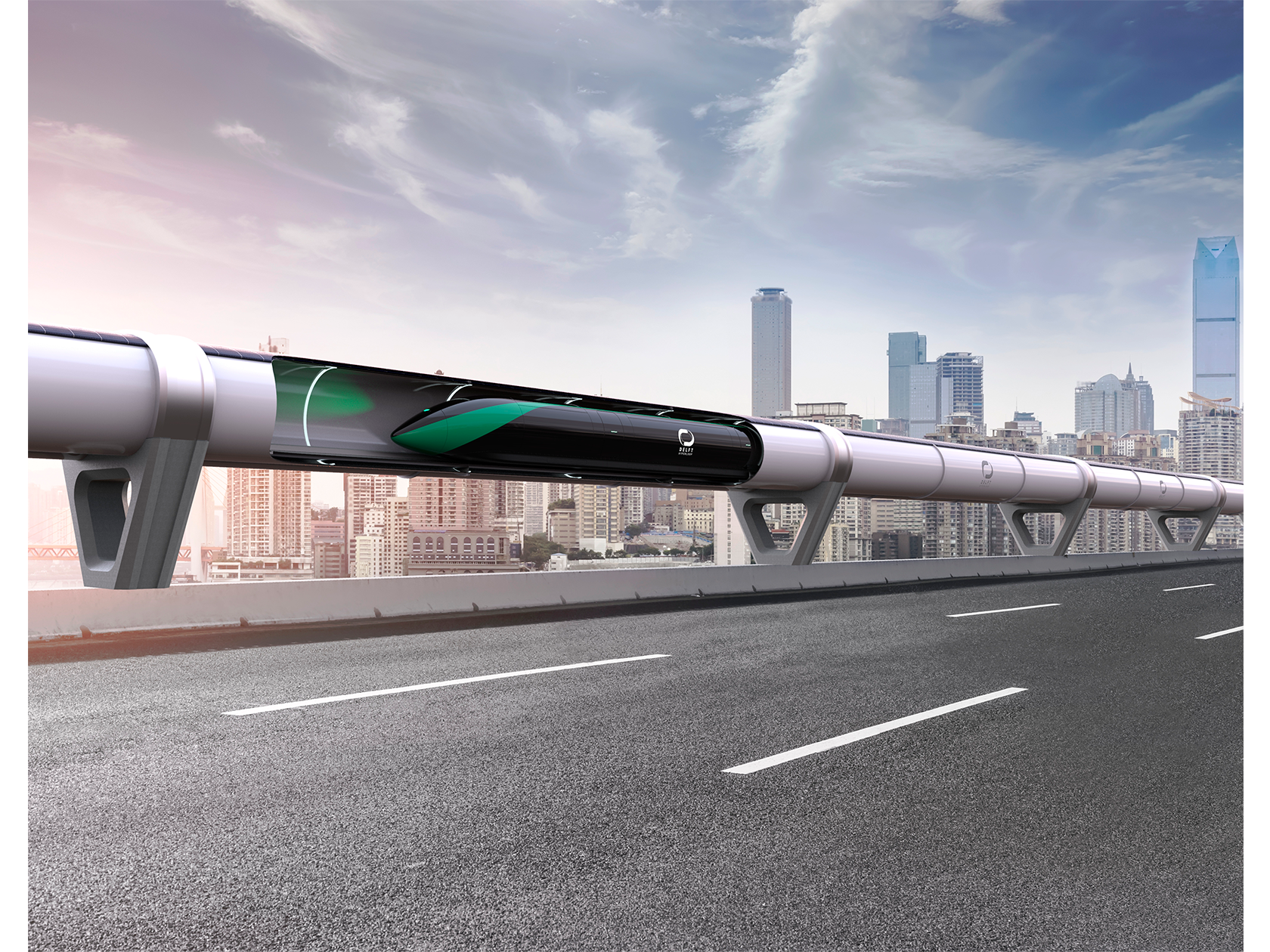
One of the greatest challenges in bringing the hyperloop to reality is creating the necessary infrastructure. With tracks crossing multiple countries, aligning international standards is crucial, alongside addressing safety and regulatory challenges. By testing THEIA on the EHC track, Delft Hyperloop IX contributed to developing a standardised infrastructure, a key step towards making the hyperloop a global reality.
EHC

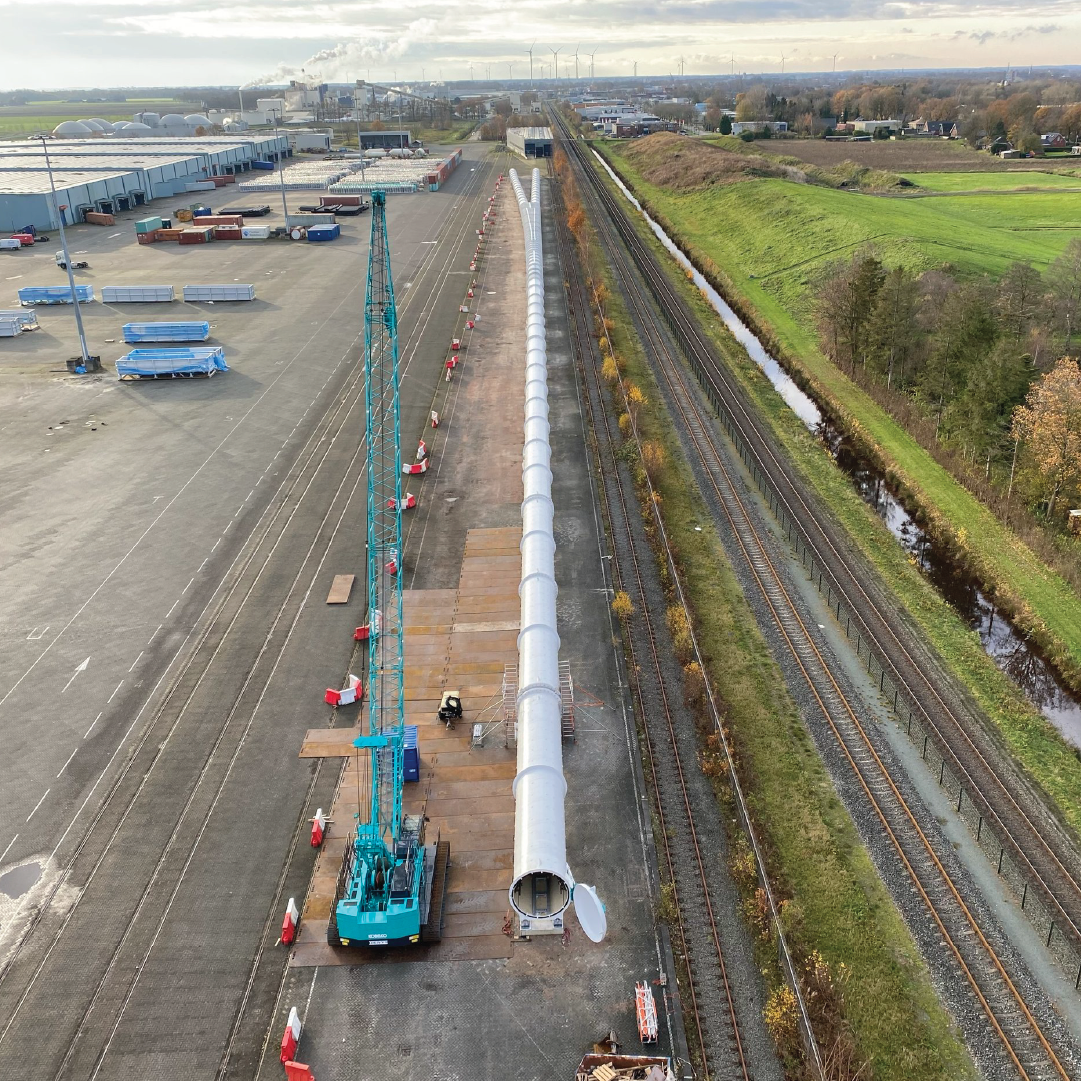
The European Hyperloop Center (EHC) is a non-profit organisation based in Veendam, the Netherlands, dedicated to accelerating hyperloop development. With its state-of-the-art track in Groningen, the EHC positions the Netherlands as a global epicentre for hyperloop innovation. With THEIA, Delft Hyperloop became the first student team to test on the EHC track, contributing to the advancement of hyperloop technology and infrastructure.